
New in Fridg this week: Kohlrouladen, galbi jjim, espinacas con garbanzos and blanquette de veau
5 min read
This week's four new dinners in Fridg go from a German family table to a Korean holiday, a tapas bar in Seville and a Paris kitchen. Here is the story behind each one.
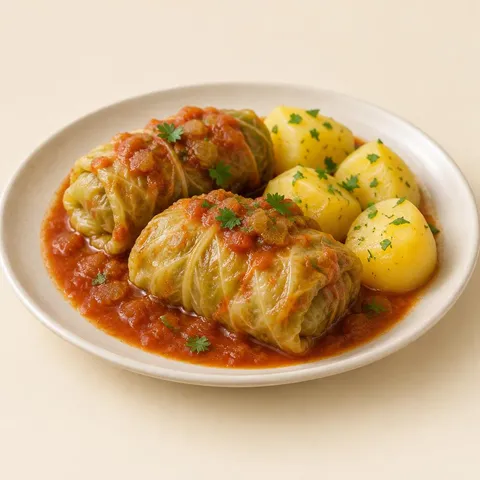 KohlrouladenCabbage leaves rolled around a meat filling and braised in tomato
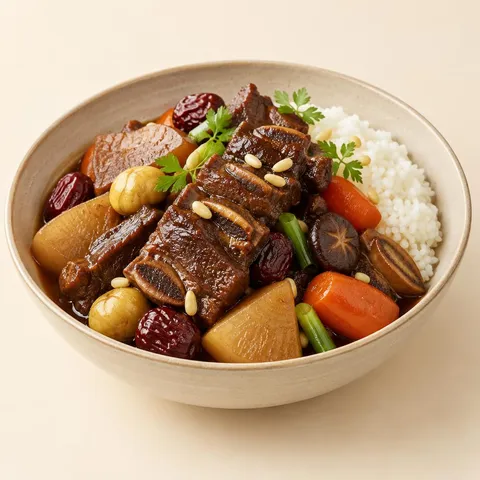 Galbi jjimBraised short ribs that Korean families make for the holidays
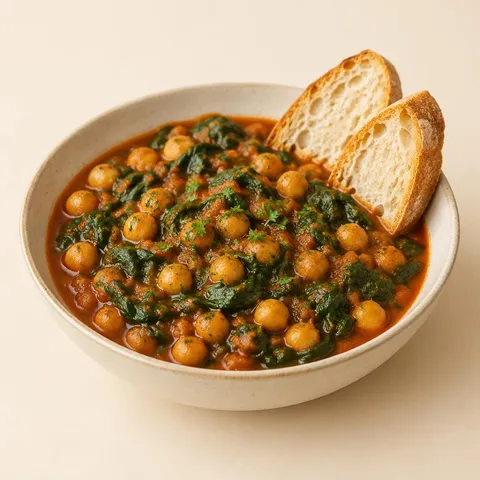 Espinacas con garbanzosSeville's chickpeas with spinach, a humble tapa with a long past
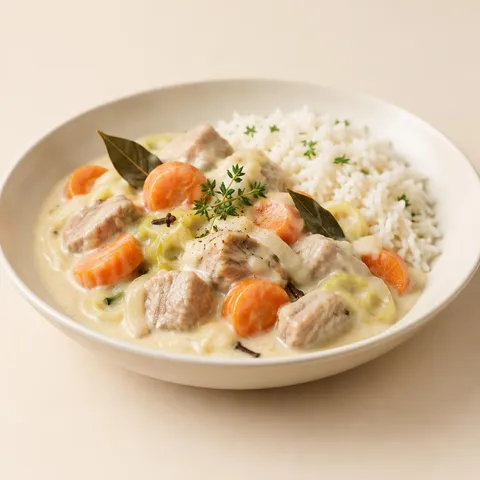 Blanquette de veauA gentle French veal stew in a creamy white sauce
Kohlrouladen
German · 1 h 40 min · serves 6
A Kohlroulade is minced meat rolled up in blanched cabbage leaves and braised in a sauce, a home-cooking classic usually served with boiled or mashed potatoes. The word joins Kohl, cabbage, with Roulade, which German borrowed from the French rouler, to roll; it took on its kitchen sense of a filled meat roll around 1800. In southern Germany and Austria the same dish is a Krautwickel, or Krautwickerl in Bavaria.
Germany's cabbage rolls belong to a big family of stuffed leaves that most writers link to Ottoman cooking: sarma, Turkish for "wrapped", in Turkey and the Balkans, sarmale in Romania, töltött káposzta in Hungary and gołąbki in Poland. Cabbage mattered in the colder parts of Central and Eastern Europe because it keeps through the winter, and for a long time it was the vitamin store of the cold months.
One story says Sweden got its cabbage rolls, kåldolmar, from King Charles XII. After losing at Poltava in 1709 he spent years in the Ottoman town of Bender, and his Turkish creditors and their cooks followed him to Stockholm. A dolma recipe then turns up in Cajsa Warg's cookbook, and Sweden now keeps 30 November, the day the king died, as cabbage-roll day. Rolling them takes a little patience, which makes them a nice thing to cook together.
Find it in Fridg: Discover, under German. Open it, and one tap puts everything it needs on your shopping list.
Galbi jjim
Korean · 2 h 20 min · serves 4
The name puts together galbi, short ribs, and jjim, a dish steamed or braised in a seasoned liquid. Beef short ribs have long been one of the dearest cuts in Korea, so galbi jjim is a dish for special days: family holidays such as Chuseok, the autumn harvest festival, and other big family dinners.
One account, from the Institute of Traditional Korean Food as the Korea Herald quotes it, says the dish goes back to the mid-1700s and was a favourite of the Joseon royal court. Today many families also serve thin, cross-cut "LA galbi" at the holidays, a cheaper cut that Korean immigrants in Los Angeles made popular.
The city of Daegu has its own spicy version, jjimgalbi. It began in the 1970s on a street in Dongin-dong, where a bar served it to workers with makgeolli, and the street now has about a dozen jjimgalbi restaurants. Make it when there is something to celebrate, or when you want an ordinary evening to feel like a holiday.
Find it in Fridg: Discover, under Korean. Open it, and one tap puts everything it needs on your shopping list.
Espinacas con garbanzos
Spanish · 40 min · serves 4 · meat-free
Espinacas con garbanzos, spinach with chickpeas, is a dish of Seville and much of Andalusia: a standard tapa in the region's bars as well as a dish cooked at home. It began as a humble, cheap country dish of pulses, greens and stale bread, and it belongs to Lent and Holy Week, the season of meatless days. In Seville it counts as a Lenten classic.
Its roots are usually traced to al-Andalus, but the sources disagree on how far back they go. One says the Arabs brought both chickpeas and spinach to the peninsula. Another says chickpeas had been eaten in Spain since Roman times, and that spinach, from Persia, reached Europe in the 9th century. Forty minutes, no meat and a few humble things from the cupboard: a weeknight dinner with centuries behind it.
Find it in Fridg: Discover, under Spanish. Open it, and one tap puts everything it needs on your shopping list.
Blanquette de veau
French · 3 h 10 min · serves 6
A blanquette is a stew of white meat, veal above all, cooked in a white stock and served in a white sauce enriched with cream and egg; the name comes from blanc, white. The first written recipe is credited to Vincent La Chapelle's Le Cuisinier moderne of 1735, when it was a way of using up leftover roast meat in a white sauce.
Today's blanquette, raw veal simmered in broth, took shape in the 19th century, in the kitchens of the Parisian bourgeoisie. No region can prove it is the birthplace: Normandy, the Lyonnais and Poitou all claim it, and others name Île-de-France or Auvergne.
Rice is its classic partner, though Escoffier suggested noodles, and pasta or potatoes are common too. It is still a national favourite: in a 2025 Ipsos survey for the Michelin Guide, the French put it third, after bœuf bourguignon and cassoulet, among the dishes that best represent France abroad. It is gentle, creamy comfort food, and a slow Sunday is the perfect time for it.
Find it in Fridg: Discover, under French. Open it, and one tap puts everything it needs on your shopping list.