
New in Fridg this week: ossobuco, dal makhani, chicken tinga tostadas and bangers and mash
5 min read
Our very first week of new dinners in Fridg brings four from Milan, Old Delhi, Puebla and Britain. Here is where each one comes from, and a little of the story behind it.
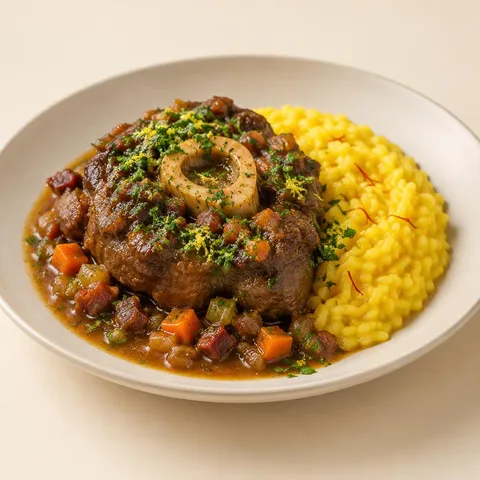 OssobucoVeal shank braised slowly, the way they do it in Milan
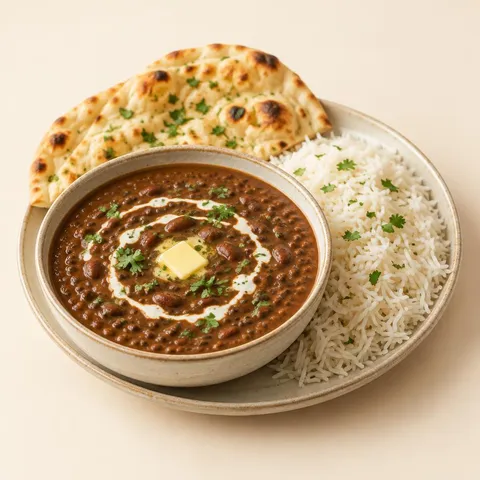 Dal makhaniThe rich, creamy black lentils that Old Delhi made famous
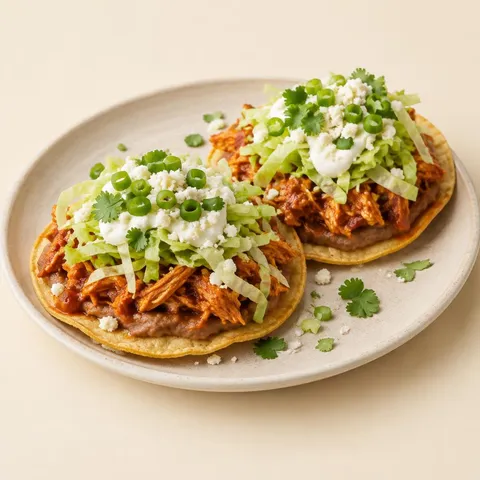 Chicken tinga tostadasCrisp tortillas piled high with smoky chipotle chicken
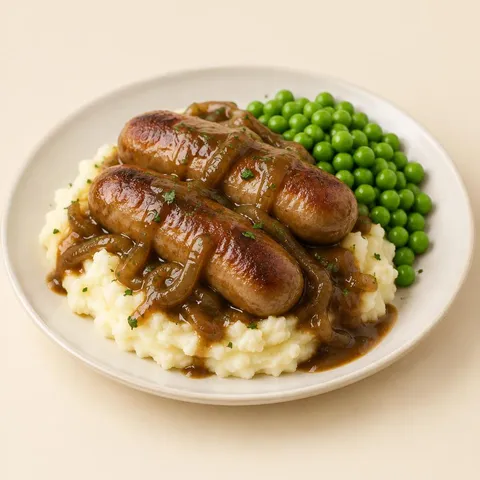 Bangers and mashSausages on mash under onion gravy, made for a cold evening
Ossobuco
Italian · 2 h 10 min · serves 4
Ossobuco is a dish of Lombardy, and above all of Milan, which is why you will often see it called ossobuco alla milanese. The name means "bone with a hole" (òss bus in Milanese dialect): the cut is a thick slice across a veal shank, with the round marrow bone in the middle.
The older Milanese way, in bianco, uses no tomato, or only a little for colour. The version most cooks know today adds tomato, with carrot, celery and onion.
It is finished with gremolata, a fresh scatter of chopped parsley, lemon zest and garlic. In Milan it is eaten on a bed of saffron-yellow risotto alla milanese; elsewhere, polenta or mashed potato are the usual partners. It takes a couple of hours on a low heat, and it is worth every one of them.
Find it in Fridg: Discover, under Italian. Open it, and one tap puts everything it needs on your shopping list.
Dal makhani
Indian · 10 h 20 min · serves 4 · meat-free
Whole black urad dal, cooked slowly and eaten with rotis, was an everyday dish at the roadside dhabas of the Punjabis of Peshawar. When India was partitioned in 1947, refugees from there carried it into north India.
The creamy dish you find in restaurants was made at Moti Mahal in Daryaganj, Old Delhi, a restaurant opened after Partition by men from Peshawar, among them Kundan Lal Gujral and Kundan Lal Jaggi. It grew out of the same kitchen's butter chicken: black dal finished in the buttery tomato-and-cream sauce, as a dish for vegetarians. Makhani means buttery, from makhan, butter. As the Gujral family tells it, the new step was the tomato: Punjabi cooks had soured their dal with yoghurt, never tomato.
Who invented it, and when, is still argued over. In January 2024 Gujral's heirs, who run Moti Mahal Delux, took Daryaganj, a restaurant opened in 2019 by Jaggi's grandson, to the Delhi High Court over its claim to be the inventors of butter chicken and dal makhani. Daryaganj answers that the partners created the dishes together in Delhi, and points to a partnership deed of 1949. The dates differ too: Moti Mahal's side places the dishes in its Peshawar years, the 1930s, while Wikipedia says Delhi in the early 1950s. However it began, it is a dish worth planning ahead for: most of its ten hours are the lentils soaking overnight, and the rest is slow simmering that turns a bag of lentils into something rich and velvety.
Find it in Fridg: Discover, under Indian. Open it, and one tap puts everything it needs on your shopping list.
Chicken tinga tostadas
Mexican · 55 min · serves 8
Tinga is thought to come from Puebla, in central Mexico, and the first known printed recipe is in La cocinera poblana, a Puebla cookbook of 1881. It is now cooked all over central Mexico and beyond, with shredded chicken, pork or beef, and eaten as a midday main or tucked into tacos, quesadillas and tostadas.
Its sauce is tomato, plenty of sliced onion and chipotle chillies in adobo, which give it a smoky heat. A chipotle is a ripe jalapeño, smoke-dried, and its name comes from the Nahuatl chilpoctli, "smoked chilli". One story says the dish's own name comes from tinga, a colloquial Mexican word for something disorderly: a fair word for a tangle of shredded meat and onion.
A tostada, Spanish for "toasted", is a corn tortilla fried, or dried in the sun or air, until it is flat, hard and crisp. On one, tinga sits on a layer of refried beans under lettuce, cream and crumbled fresh cheese, and Larousse's Mexican kitchen dictionary names tinga poblana as Puebla's own tostada topping. Ours serves eight, so it is a good one for a crowd: put everything on the table and let everyone build their own.
Find it in Fridg: Discover, under Mexican. Open it, and one tap puts everything it needs on your shopping list.
Bangers and mash
British · 40 min · serves 4
Bangers and mash is sausages on mashed potato, usually under onion gravy and often with peas. Sausages with potatoes became a cheap, filling meal for working Britain, and Wikipedia places the pairing in the Industrial Revolution; by the First World War it was a national staple.
The nickname comes from that war's shortages, when sausages were bulked out with water and cheap filler and could burst with a bang in the frying pan. The word is on record from at least 1919, so the common claim that it comes from the Second World War is wrong, though it spread more widely then. Forty minutes from start to finish, and as warming a plate as a cold evening could ask for.
Find it in Fridg: Discover, under British. Open it, and one tap puts everything it needs on your shopping list.